IDmyBee
  • IDmyBee
    • The project
    • Why IDmyBee ?
    • You can help
    • The team
  • Bee Taxa
    • List of genera
    • Andrenidae >
      • Andreninae >
        • Andrena
        • Cubiandrena
      • Panurginae >
        • Melitturga
        • Camptopoeum
        • Clavipanurgus
        • Flavipanurgus
        • Halopanurgus
        • Panurginus
        • Panurgus
        • Simpanurgus
    • Apidae >
      • Anthophorinae >
        • Ancyla
        • Tarsalia
        • Amegilla
        • Anthophora
        • Habropoda
      • Apinae >
        • Apis
        • Bombus
      • Eucerinae >
        • Tetralonia
        • Eucera
      • Nomadinae >
        • Ammobates
        • Chiasmognathus
        • Parammobatodes
        • Pasites
        • Ammobatoides
        • Schmiedeknechtia
        • Biastes
        • Epeolus
        • Triepeolus
        • Melecta
        • Thyreus
        • Nomada
        • Epeoloides
      • Xylocopinae >
        • Ceratina
        • Xylocopa
    • Colletidae >
      • Colletes
      • Hylaeus
    • Halictidae >
      • Halictinae >
        • Halictus
        • Seladonia
        • Lasioglossum
        • Thrincohalictus
        • Ceylalictus
        • Nomioides
        • Sphecodes
      • Nomiinae >
        • Nomiapis
        • Pseudapis
      • Rophitinae >
        • Dufourea
        • Rophites
        • Rhophitoides
        • Systropha
    • Megachilidae >
      • Lithurginae >
        • Lithurgus
      • Anthidiini >
        • Afranthidium
        • Anthidiellum
        • Anthidium
        • Eoanthidium
        • Icteranthidium
        • Pseudoanthidium
        • Rhodanthidium
        • Stelis
        • Trachusa
      • Dioxyini >
        • Aglaoapis
        • Dioxys
        • Ensliniana
        • Metadioxys
        • Paradioxys
      • Megachilini >
        • Coelioxys
        • Megachile
      • Osmiini >
        • Chelostoma
        • Haetosmia
        • Heriades
        • Hofferia
        • Hoplitis
        • Osmia
        • Protosmia
        • Stenoheriades
    • Melittidae >
      • Dasypoda
      • Macropis
      • Melitta
  • Tutorial
    • How to use IDmyBee?
    • Online ID tools (Xper3)
    • Is it a bee?
    • Bee anatomy
    • Genus page guide
    • How to cite IDmyBee?
  • Bibliography
    • Bibliography
    • Online resources
  • News
  • Contact us
  • IDmyBee
    • The project
    • Why IDmyBee ?
    • You can help
    • The team
  • Bee Taxa
    • List of genera
    • Andrenidae >
      • Andreninae >
        • Andrena
        • Cubiandrena
      • Panurginae >
        • Melitturga
        • Camptopoeum
        • Clavipanurgus
        • Flavipanurgus
        • Halopanurgus
        • Panurginus
        • Panurgus
        • Simpanurgus
    • Apidae >
      • Anthophorinae >
        • Ancyla
        • Tarsalia
        • Amegilla
        • Anthophora
        • Habropoda
      • Apinae >
        • Apis
        • Bombus
      • Eucerinae >
        • Tetralonia
        • Eucera
      • Nomadinae >
        • Ammobates
        • Chiasmognathus
        • Parammobatodes
        • Pasites
        • Ammobatoides
        • Schmiedeknechtia
        • Biastes
        • Epeolus
        • Triepeolus
        • Melecta
        • Thyreus
        • Nomada
        • Epeoloides
      • Xylocopinae >
        • Ceratina
        • Xylocopa
    • Colletidae >
      • Colletes
      • Hylaeus
    • Halictidae >
      • Halictinae >
        • Halictus
        • Seladonia
        • Lasioglossum
        • Thrincohalictus
        • Ceylalictus
        • Nomioides
        • Sphecodes
      • Nomiinae >
        • Nomiapis
        • Pseudapis
      • Rophitinae >
        • Dufourea
        • Rophites
        • Rhophitoides
        • Systropha
    • Megachilidae >
      • Lithurginae >
        • Lithurgus
      • Anthidiini >
        • Afranthidium
        • Anthidiellum
        • Anthidium
        • Eoanthidium
        • Icteranthidium
        • Pseudoanthidium
        • Rhodanthidium
        • Stelis
        • Trachusa
      • Dioxyini >
        • Aglaoapis
        • Dioxys
        • Ensliniana
        • Metadioxys
        • Paradioxys
      • Megachilini >
        • Coelioxys
        • Megachile
      • Osmiini >
        • Chelostoma
        • Haetosmia
        • Heriades
        • Hofferia
        • Hoplitis
        • Osmia
        • Protosmia
        • Stenoheriades
    • Melittidae >
      • Dasypoda
      • Macropis
      • Melitta
  • Tutorial
    • How to use IDmyBee?
    • Online ID tools (Xper3)
    • Is it a bee?
    • Bee anatomy
    • Genus page guide
    • How to cite IDmyBee?
  • Bibliography
    • Bibliography
    • Online resources
  • News
  • Contact us

GENUS MELITTURGA

Author: Latreille, 1809

Type species: Eucera clavicornis Latreille, 1809, monobasic.
Subgenera: Melitturga s.str.; Petrusianna
Synonyms: Petrusia Patiny, 1999.
Clade: Anthophila
Family: Andrenidae
Subfamily: Panurginae
Tribe: Melitturgini
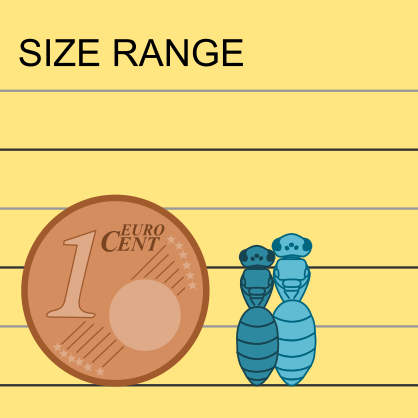
Estimated min and max body length from the genus.
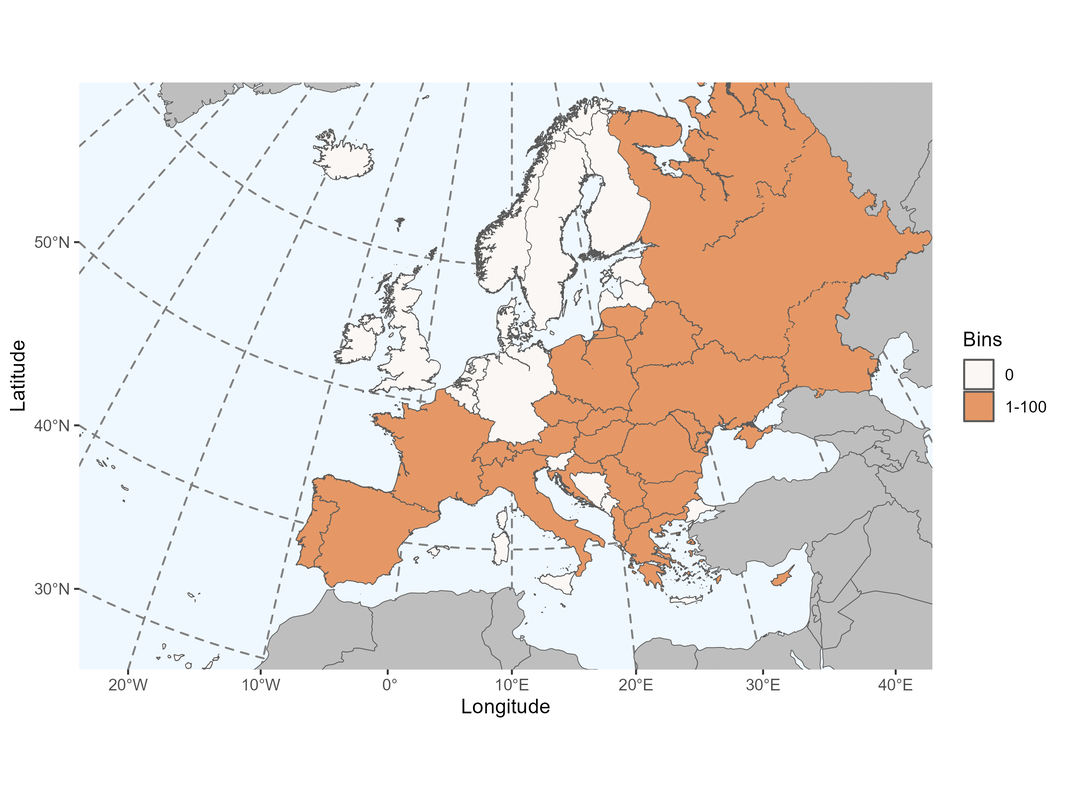
Map source: S. Reverte 2023, ORBIT.
Distinctive traits
  • Large bees
  • 3 submarginal cells of sub-equivalent size (cell 3 slightly larger),
  • truncated marginal cell
  • Club-shaped antennae in males (distinctly wider apex).
  • Eyes converging on the top of the head in males, (the eyes are closer of their posterior ocelli than the 2 ocelli together.)

Pictures of distinctive traits
Morphologically close genera and how to distinguish them:
  • Melitturga - Andrena
Melitturga males have converging eyes on the head and club-shaped antennae. Melitturga females have no fovea on the face and a truncated marginal cell.
Andrena males have normal eyes and antennae. Andrena females have foveae on the face and a rounded or pointed marginal cell.
  • Melitturga - Apis
Melitturga males have enlarged eyes, but the eyes are not touching at the top of the head. Plus, Melitturga species have a short marginal cell and club-shaped antennae.
Apis males have enlarged eyes touching at the top of the head, a banana-shaped marginal cell and regular antennae.
  • Melitturga - Anthidium and other Anthidiini
Melitturga species have a truncated marginal cell, a second recurrent vein anteriorly connecting at the second submarginal cell, males with enlarged eyes and females without a ventral brush.
Anthidium and other Anthidiini species have a pointed marginal cell, a second recurrent vein anteriorly connecting after the second submarginal cell, males have normal eyes and females have a ventral brush.
General comments on Melitturga species identification
Species identification include criteria about clypeus punctation and mouthparts, plus genitalia for males.
SPECIES IDENTIFICATION TOOL
Sorry, but the species identification tool is not yet available for Melitturga. 
Please check the reference(s) at the bottom of the page for traditional keys.
List of the 6 Melitturga species found in Europe (Ghisbain et al., 2023):
Melitturga (Melitturga) clavicornis (Latreille, 1806)
Melitturga (Melitturga) praestans Giraud, 1861
Melitturga (Melitturga) syriaca Friese, 1899


Melitturga (Melitturga) taurica Friese, 1922
Melitturga (Petrusianna) caudata Pérez, 1879
Melitturga (Petrusianna) spinosa Morawitz, 1892
References with identification keys for some of the species:
  • Osytshnjuk, A.Z. (1978).  Semejstvo  Andreninae  – Andrenidy.  In  Opredelitel  nasekomych  evropejskoj chasti SSSR. (pp. 315-369). Leningrad: Nauka.
  • Schmid-Egger C. & Scheuchl E. (1997) Illustrierte Bestimmungstabellen der Wildbienen Deutschlands und Österreichs unter Berücksichtigung der Arten ser Schweiz. Band Andrenidae. Velden/Deutschland.

Online resources:
Atlas hymenoptera (Europe)
WestPalBees (Europe)
Page contributors:
  • Adrien Perrard (Dec. 2023)
  • Matthieu Aubert (Aug. 2020)
  • Adrien Perrard (Dec. 2019)

You noticed a mistake? You have a suggestion to improve this page?
Don't keep it to yourself, contact us and become a contributor to IDmyBee!

References used to write this page:
  • Ghisbain, G., Rosa, P., Bogusch, P., Flaminio, S., Le Divelec, R., Dorchin, A., Kasparek, M., Kuhlmann, M., Litman, J., Mignot, M., Müller, A., Praz, C., Radchenko, V.G., Rasmont, P., Risch, S., Roberts, S.P.M., Smit, J., Wood, T.J., Michez, D. & Reverte, S. (2023). The new annotated checklist of the wild bees of Europe (Hymenoptera: Anthophila). Zootaxa, 5327(1), 1-147.
  • ​Michener, C.D. 2007. The Bees of the World, 2nd Edition. The John Hopkins University Press, Baltimore.
  • Michez D., Rasmont P., Terzo, M., Vereecken, N. 2019. Abeilles d'Europes. Hymenoptères d'Europes, Volume 1. N.A.P. Editions.
  • Nieto, A., Roberts, S. P., Kemp, J., Rasmont, P., Kuhlmann, M., García Criado, M., ... & Michez, D. 2014. European red list of bees. Luxembourg: Publication Office of the European Union, 98. (IUCN 2014)
  •  Rasmont, P., Devalez, Jelle, Pauly, A., Michez, D. & Radchenko, V.G. 2017. Addition to the checklist of IUCN European wild bees (Hymenoptera: Apoidea). Annales de la Société entomologique de France 53: 17-32.

Home

About

News

Contact

IDmyBee is a project managed by researchers. If you use its content, please cite us.