IDmyBee
  • IDmyBee
    • The project
    • Why IDmyBee ?
    • You can help
    • The team
  • Bee Taxa
    • List of genera
    • Andrenidae >
      • Andreninae >
        • Andrena
        • Cubiandrena
      • Panurginae >
        • Melitturga
        • Camptopoeum
        • Clavipanurgus
        • Flavipanurgus
        • Halopanurgus
        • Panurginus
        • Panurgus
        • Simpanurgus
    • Apidae >
      • Anthophorinae >
        • Ancyla
        • Tarsalia
        • Amegilla
        • Anthophora
        • Habropoda
      • Apinae >
        • Apis
        • Bombus
      • Eucerinae >
        • Tetralonia
        • Eucera
      • Nomadinae >
        • Ammobates
        • Chiasmognathus
        • Parammobatodes
        • Pasites
        • Ammobatoides
        • Schmiedeknechtia
        • Biastes
        • Epeolus
        • Triepeolus
        • Melecta
        • Thyreus
        • Nomada
        • Epeoloides
      • Xylocopinae >
        • Ceratina
        • Xylocopa
    • Colletidae >
      • Colletes
      • Hylaeus
    • Halictidae >
      • Halictinae >
        • Halictus
        • Seladonia
        • Lasioglossum
        • Thrincohalictus
        • Ceylalictus
        • Nomioides
        • Sphecodes
      • Nomiinae >
        • Nomiapis
        • Pseudapis
      • Rophitinae >
        • Dufourea
        • Rophites
        • Rhophitoides
        • Systropha
    • Megachilidae >
      • Lithurginae >
        • Lithurgus
      • Anthidiini >
        • Afranthidium
        • Anthidiellum
        • Anthidium
        • Eoanthidium
        • Icteranthidium
        • Pseudoanthidium
        • Rhodanthidium
        • Stelis
        • Trachusa
      • Dioxyini >
        • Aglaoapis
        • Dioxys
        • Ensliniana
        • Metadioxys
        • Paradioxys
      • Megachilini >
        • Coelioxys
        • Megachile
      • Osmiini >
        • Chelostoma
        • Haetosmia
        • Heriades
        • Hofferia
        • Hoplitis
        • Osmia
        • Protosmia
        • Stenoheriades
    • Melittidae >
      • Dasypoda
      • Macropis
      • Melitta
  • Tutorial
    • How to use IDmyBee?
    • Online ID tools (Xper3)
    • Is it a bee?
    • Bee anatomy
    • Genus page guide
    • How to cite IDmyBee?
  • Bibliography
    • Bibliography
    • Online resources
  • News
  • Contact us
  • IDmyBee
    • The project
    • Why IDmyBee ?
    • You can help
    • The team
  • Bee Taxa
    • List of genera
    • Andrenidae >
      • Andreninae >
        • Andrena
        • Cubiandrena
      • Panurginae >
        • Melitturga
        • Camptopoeum
        • Clavipanurgus
        • Flavipanurgus
        • Halopanurgus
        • Panurginus
        • Panurgus
        • Simpanurgus
    • Apidae >
      • Anthophorinae >
        • Ancyla
        • Tarsalia
        • Amegilla
        • Anthophora
        • Habropoda
      • Apinae >
        • Apis
        • Bombus
      • Eucerinae >
        • Tetralonia
        • Eucera
      • Nomadinae >
        • Ammobates
        • Chiasmognathus
        • Parammobatodes
        • Pasites
        • Ammobatoides
        • Schmiedeknechtia
        • Biastes
        • Epeolus
        • Triepeolus
        • Melecta
        • Thyreus
        • Nomada
        • Epeoloides
      • Xylocopinae >
        • Ceratina
        • Xylocopa
    • Colletidae >
      • Colletes
      • Hylaeus
    • Halictidae >
      • Halictinae >
        • Halictus
        • Seladonia
        • Lasioglossum
        • Thrincohalictus
        • Ceylalictus
        • Nomioides
        • Sphecodes
      • Nomiinae >
        • Nomiapis
        • Pseudapis
      • Rophitinae >
        • Dufourea
        • Rophites
        • Rhophitoides
        • Systropha
    • Megachilidae >
      • Lithurginae >
        • Lithurgus
      • Anthidiini >
        • Afranthidium
        • Anthidiellum
        • Anthidium
        • Eoanthidium
        • Icteranthidium
        • Pseudoanthidium
        • Rhodanthidium
        • Stelis
        • Trachusa
      • Dioxyini >
        • Aglaoapis
        • Dioxys
        • Ensliniana
        • Metadioxys
        • Paradioxys
      • Megachilini >
        • Coelioxys
        • Megachile
      • Osmiini >
        • Chelostoma
        • Haetosmia
        • Heriades
        • Hofferia
        • Hoplitis
        • Osmia
        • Protosmia
        • Stenoheriades
    • Melittidae >
      • Dasypoda
      • Macropis
      • Melitta
  • Tutorial
    • How to use IDmyBee?
    • Online ID tools (Xper3)
    • Is it a bee?
    • Bee anatomy
    • Genus page guide
    • How to cite IDmyBee?
  • Bibliography
    • Bibliography
    • Online resources
  • News
  • Contact us

GENUS   Stenoheriades

Author: Tkalcu, 1984

Type species: Pseudoheriades hofferi Tkalcu, 1984, by original designation.
Clade: Anthophila
Family: Megachilidae
SubF: Megachilinae
Tribe: Osmiini
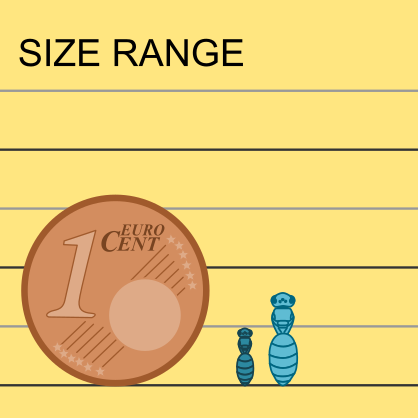
Estimated min and max body length from the genus.
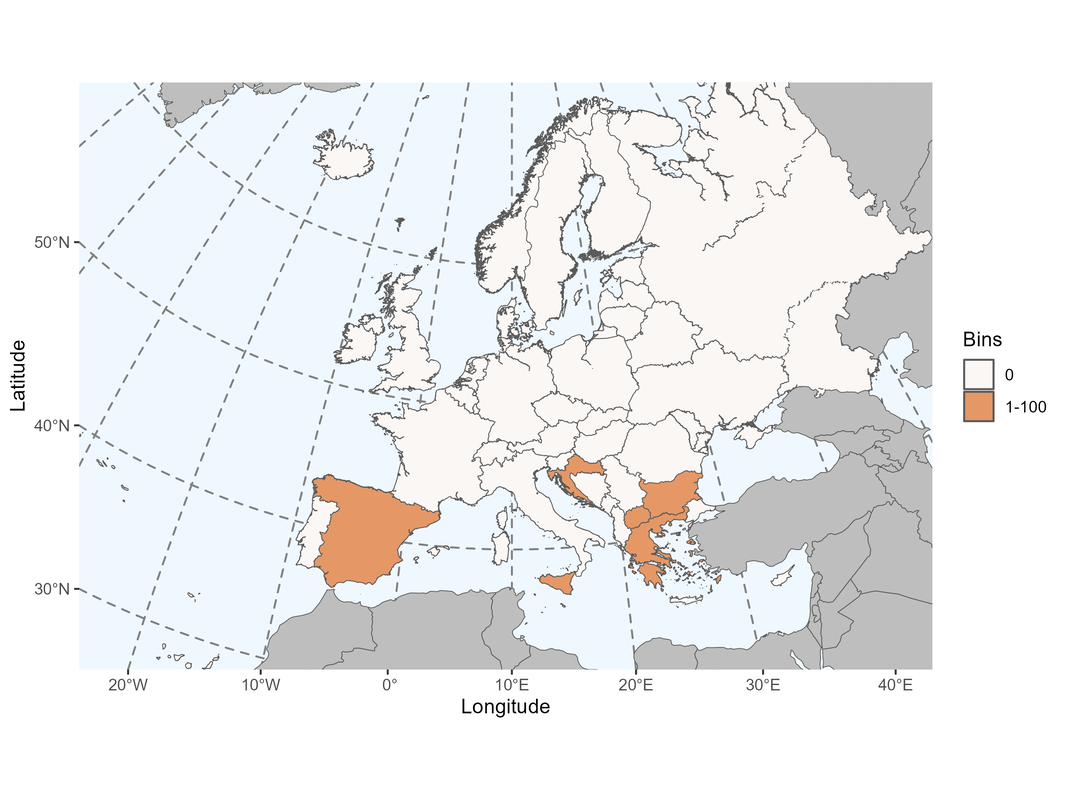
Map source: S. Reverte 2023, ORBIT.
Estimated difficulty to accurately identify a specimen as belonging to this genus.
Distinctive traits:
  •  2 submarginal cells
  •  ventral scopa in females
  •  arolium present
  •  transverse carina on T1
  •  Long proboscis extending beyond its fossa at rest
  •  T6 with preapical crenulate transverse carina in males
  •  T7 notched or bifid apically in males
Pictures of distinctive traits.
Morphologically close genera and how to distinguish them
  • Stenoheriades - Heriades
Stenoheriades species have a long proboscis extending beyond its fossa at rest. The mandible is bidentate.
Heriades species have tooth-like axillae and a shorter proboscis. The mandible has three or more teeth.
  • Stenoheriades - Hofferia
Stenoheriades species have long hairs on the inner margin of the mandible and the apex of the labrum.
Hofferia species have no or only short hairs on the inner margin of the mandible or the apex of the labrum.
  • Stenoheriades - Chelostoma, Haetosmia, Hoplitis & Osmia.
Stenoheriades species have a transverse carina on T1 and tooth-like axillae.
Chelostoma, Haetosmia, Hoplitis & Osmia don't have a transverse carina on T1 and have rounded axillae (except for axillae of Osmia (Hoplosmia)).
  • Stenoheriades - Protosmia  
Protosmia species have a carinated propodeal triangle. Some don't have a transverse carina on the T1.
Stenoheriades species have only a vestigial propodeal triangle, but do have a transverse carina on the T1.
General comments on Stenoheriades species identification
The two european species can be distinguished on the basis of the apical part of the clypeus (depressed in females and simple in males of S. coelostoma, inflated in S. maroccana, with 3 teeth in males) and mandible teeth (3 in females of S. coelostoma, 2 in females of S. maroccana).
SPECIES IDENTIFICATION TOOL
Sorry, but the species identification tool is not yet available for Stenoheriades. 
Please check the reference(s) below for traditional keys.

List of the 2 Stenoheriades species found in Europe (Ghisbain et al. 2023):
Stenoheriades coelostoma (Benoist, 1935)
Stenoheriades maroccana (Benoist, 1928)
References with identification keys for some of the species:
  • Müller A., Trunz V. 2014. Palaearctic osmiine bees of the genera Hofferia and Stenoheriades (Megachilidae, Osmiini): biology, taxonomy and key to species. Zootaxa, 3765(2) : 175-186
Online resources:
Palearctic Osmiine Bees (Palearctic) 
Exotic Bee ID (World)
WestPalBees (West Palearctic)
Exotic Bee ID (World)

Page contributors:
  • Adrien Perrard (Dec. 2023)
  • Adrien Perrard (Dec. 2019)

You noticed a mistake? You have a suggestion to improve this page?
Don't keep it to yourself, please contact us and become a contributor to IDmyBee!
References used to write this page:
  • Ghisbain, G., Rosa, P., Bogusch, P., Flaminio, S., Le Divelec, R., Dorchin, A., Kasparek, M., Kuhlmann, M., Litman, J., Mignot, M., Müller, A., Praz, C., Radchenko, V.G., Rasmont, P., Risch, S., Roberts, S.P.M., Smit, J., Wood, T.J., Michez, D. & Reverte, S. (2023). The new annotated checklist of the wild bees of Europe (Hymenoptera: Anthophila). Zootaxa, 5327(1), 1-147.
  • Michener, C.D. 2007. The Bees of the World, 2nd Edition. The John Hopkins University Press, Baltimore.
  • Michez D., Rasmont P., Terzo, M., Vereecken, N. 2019. Abeilles d'Europes. Hymenoptères d'Europes, Volume 1. N.A.P. Editions.
  • Nieto, A., Roberts, S. P., Kemp, J., Rasmont, P., Kuhlmann, M., García Criado, M., ... & Michez, D. 2014. European red list of bees. Luxembourg: Publication Office of the European Union, 98.
  •  Rasmont, P., Devalez, Jelle, Pauly, A., Michez, D. & Radchenko, V.G. 2017. Addition to the checklist of IUCN European wild bees (Hymenoptera: Apoidea). Annales de la Société entomologique de France 53: 17-32.

Home

About

News

Contact

IDmyBee is a project managed by researchers. If you use its content, please cite us.